Michael Curtotti's Author Website

"No lines sector off the sky so high above, though all the nations of the Earth be bound about with borders."

  • Books and Interviews
  • About
  • Latest Articles
  • poetry
  • Shakespeare Begins
  • Books and Interviews
  • About
  • Latest Articles
  • poetry
  • Shakespeare Begins
  • Home
  • About
  • Books and Interviews
  • Poetry
  • Italian Stories
    • Italian Art
    • Italian Food
    • Faith and Religion in Italy
      • Paganism
      • Judaism
      • Christianity
        • Arianism
        • Catholicism
      • Islam
    • Gender in Italy
    • Italy – History
      • Italian Neolithic
      • Italy Bronze Age
      • Italy during the Roman Empire
      • Italy – Early Middle Ages (550 – 1000)
      • Italy – Late Middle Ages (1000-1400)
      • Italy – Napoleonic and Restoration (1799 – 1850s)
      • Italy – Renaissance (1400 – 1700)
      • Italy – Enlightenment (1700-1800)
      • Italy Risorgimento (1840s – 1900)
      • Italy Modern (1900 onwards)
    • Italian Identity
    • Italian Languages
    • Italian Literature
      • Early Vernacular
      • 14th Century
      • Renaissance Humanism
      • Verismo
    • Italian Peoples
      • Gothic Italy
      • Neolithic Farmers
      • Normans of Italy
    • Italian Regions
      • Abruzzo
      • Basilicata
      • Campania
      • Emilia-Romagna
      • Friuli-Venezia Giulia
      • Lazio
      • Liguria
      • Lombardia
      • Marche
      • Puglia
      • Molise
      • Piemonte
      • Sardinia
      • Sicily
      • Tuscany
      • Umbria
      • Valle d’Aosta
      • Veneto
  • Shakespeare Begins
  • Articles
    • 200th anniversary articles
      • Bahá’u’lláh’s Life
      • Principles of Bahá’u’lláh
        • The Oneness of Humanity
        • Oneness of Religion
        • Independent Investigation of Truth
        • Abolition of Prejudice
        • Equality of Men and Women
        • Harmony of Science and Religion
        • World Peace
        • World Language
        • Abolition of Extremes of Wealth and Poverty
        • Universal Education
        • Materially and Spiritually Balanced Civilization
      • Bahá’u’lláh’s Writings
      • Life of the Spirit
      • Lives Inspired
      • Specific Teachings
      • Visions of the Future
    • Movie Reviews
    • Foreignness
    • Gender Equality
    • Human Rights
    • Human Rights Forebears
    • Human Rights Practice
    • Immigration
    • Migrant Workers
    • Peace
    • Refugees
    • Racism
    • Slavery
  • Women’s Work

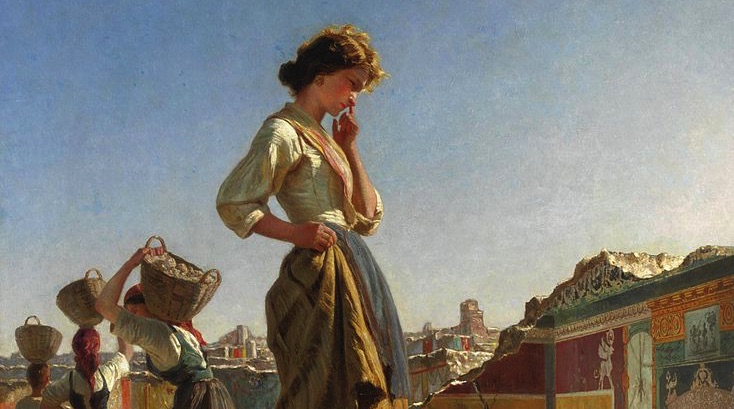
    Few of the millions who visit Pompeii every year would imagine that thousands of women laboured to clear the ancient streets on which they walk. Like other elements of Italian culture, ideas about “women’s work” have changed over time. The phrase of course brings to mind times when society pressured women to remain in the domestic sphere of the home. Yet even in the past, women could be found working outside the home as much as within it. The painting above by Filippo Palizzi shows women at work during the excavation of Pompeii. Palizzi was not the only painter to capture this theme. Below we see Eduard Sain’s painting of…

    read more

    You May Also Like

    day of the dead

    Italy’s Day of the Dead

    November 1, 2018

    An Ode to the Stone Pine

    March 17, 2023
    Lake Como seen from the village of Dongo

    Alessandro Manzoni’s Farewell to Como

    July 18, 2024
  • Who Am I to Speak to You of Italy?

    Who am I to speak to you of Italy? Chi sono io, per parlarvi dell’Italia? Who, for more than 50 years have lived in silence, far beyond her shores. Chi sono io, per parlarvi dell’Italia? Chi, per più di cinquant’anni ha vissuto in silenzio, lontano dalle sue sponde. Yet, such words do not belong to me alone. “Italian Americans are invisible people.” Fred Gardaphé writes, “Not because people refuse to see them, but because, for the most part, they refuse to be seen.” Even here, across an ocean, truth resonates in his words. And as he knows, being forgotten has a price. A price paid with the coins of self-forgetting.…

    read more

    You May Also Like

    Bust of Shakespeare in Verona at the tomb of Giulietta

    It’s funny, but Shakespeare is teaching me Italian stories

    February 5, 2023

    The Dragon the Witch and the Daughters by Luigi Capuana (English Edition)

    November 6, 2022

    Don Paolo: the Making and Unmaking of a Dragon (Il Drago Part 3)

    October 18, 2018
  • Dante’s New Love Life: the Vita Nuova

    The love poets of Dante’s day told everyone they were in love: but always kept the name of their beloved secret. Dante however, names Beatrice as his love. In telling us of her, he has made her immortal. Gemma di Manetto Donati, Dante’s actual wife, he never once mentions and she is virtually unknown. Before we jump to conclusions about what this might mean let us learn more about Dante’s love life. Vita Nuova Dante’s Vita Nuova (“New Life”), which is Dante’s best known work as an early poet, is all about “love”. Dante recounts for us a love story and he is the lover and Beatrice the beloved. Some…

    read more

    You May Also Like

    The Duty of Kindness and Sympathy Towards Strangers and Foreigners

    October 18, 2011

    Martha Root — An Astonishing Life

    May 14, 2017
    Students and teachers of Tarbiyat Girls school - gender equality

    Women and Men Have Been and Will Always Be Equal

    April 26, 2017
  • Dante Alighieri Citizen of the World

    Dante Alighieri says it plain: “to me, the world is one native country, like the sea is to fish“. Dante sees himself as a “citizen of the world”. He is, admittedly, a poet who is internationally celebrated. Nonetheless, we can find the discovery stunning. Dante is so closely paired with the Italian “brand”, that his observation seems out of place. It is natural to assume Dante would be concerned, in some sense, with the Italian national project. He is after all widely known as the “Father of Italian”. Yet it is not the case. Our tendency to assume that the past was much like the world today, is the nub…

    read more

    You May Also Like

    Giosuè Carducci and Miramar Castle

    June 22, 2020

    Dante and the Invention of the Italian Language

    October 8, 2018

    Matteo Bandello’s Forgotten Tale of the Tragic Lovers Romeo and Juliet

    March 9, 2023
  • Il Drago by Luigi Capuana Part 7: Ruminations of a Dragon

    In this seventh instalment of Luigi Capuana’s Il Drago, in translation, we continue to follow the story of Don Paolo, Giovanna and Lisa and we learn Don Paolo’s fears. Il Drago Part 7: Ruminations of a Dragon by Luigi Capuana, translation Michael Curtotti He had put them to bed and then proceeded to bed himself, after first checking on the donkey. And (so that the children would not be exhausted) he had re-washed the pots and pans himself. But he could not sleep. In his mind he was before the judge; ruminating on what he would say to him. He spoke aloud, almost as if the judge stood before him;…

    read more

    You May Also Like

    Caruso: Dalla’s Song of Love, Pain and Death

    January 25, 2021
    Duomo of Florence at night

    The sparkling Duomo in the darkness

    July 16, 2024

    Emperor Frederick II, the Wonder of the World and the Art of Falconry

    February 18, 2020
  • Which came first: pasta or noodles?

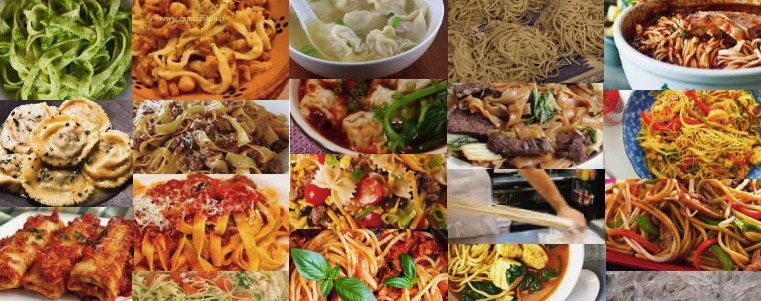
    Plot spoiler. Its noodles. Lovers of Italy, doff your cap to China! … Well, at least that’s how I was going to start this article. That was before I started reading Jen Lin-Liu’s delightful book: On the Noodle Road. She’s not so sure the story is that simple. Like Marco Polo, she travels the Silk Road, but in reverse. She is on a 21st century quest to trace the journey of noodle from East to West. No one more determined could be imagined. And, her quest is personal. Travelling through cultures that straddled East and West, I figured, might reconcile what I’d felt were opposing forces in my life; maybe I’d find others…

    read more

    You May Also Like

    Genes and the Intimacy of Place

    December 17, 2018
    Federick II Al Kamil Jerusalem

    Muslim Lucera and the Holy Roman Emperor

    February 18, 2019

    The Infinite – Giacomo Leopardi

    April 12, 2024
  • Federick II Al Kamil Jerusalem

    Muslim Lucera and the Holy Roman Emperor

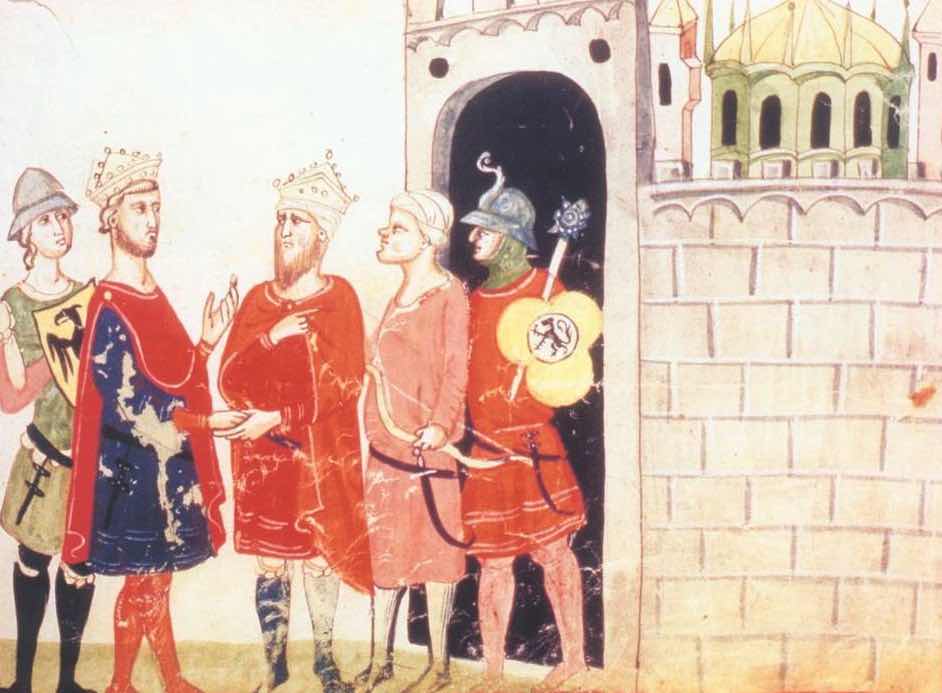
    Truth is stranger than fiction, it is said and so it is for the story of Muslim Lucera. It is a story entwined with the life and times of the Holy Roman Emperor Frederick II. We cannot call Muslim Lucera the Muslim “capital” of the Holy Roman Empire, but for a time, it very nearly was. Lucera hosted one of Frederick’s many palaces and castles. One of his primary palaces was only 30 kilometres distant, in the city of Foggia, and Frederick himself has been called the “Sultan of Lucera” (although the label is a wild exaggeration). So let us explore the story. The city of Lucera still stands on…

    read more

    You May Also Like

    The Fifty-Three Known Forefathers of the Italian People: Latest Discoveries

    December 6, 2018
    The Battle of Solferino - wounded

    “Tutti fratelli”: Solferino, Italy and Humanity’s Wounds

    October 22, 2018
    day of the dead

    Italy’s Day of the Dead

    November 1, 2018
  • Maria Famà – “I will not check the box for white on any form”

    Maria Famà’s poem “I Am Not White” lives in the folded places between two worlds. Through her Italian-American eyes we see her lived experience of America’s hyper-racialised culture. The central dynamic of the poem is a box on a form. A box which, in truth, demands a lie. For her stories do not belong. The convenience which in America goes with the claim is too uncomfortable. The price is too high for Maria Famà. “I will not check the box for white on any form.” Her reflections go further for her words reminds us that the Mediterranean, where Sicily (and Italy) is found, is not only a European sea. Its…

    read more

    You May Also Like

    We will decide who comes here …

    October 5, 2023
    I am an immigrant

    Movement Against Xenophobia – I am an Immigrant

    March 3, 2015
    migrant rights are human rights protest

    Migrant Rights? Not our problem …

    June 8, 2011
  • Snow Harvesters and the Origins of Gelato

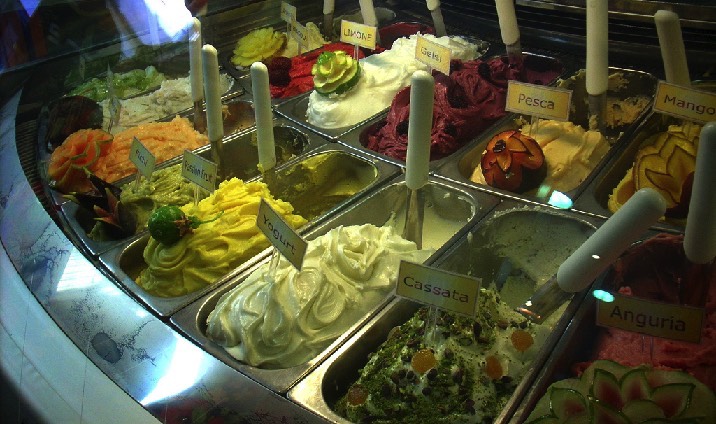
    Like the tomato sauce on pasta, there are few things that today say Italian as much as gelato. Particularly gelato from a local gelateria. Dozens of flavours can be found: pistacchio, stracciatella, panna cotta, nocciola, anguria, amarena and fragola among many others.  While we can translate some of the names (pistachio, hazelnut, melon, strawberry) it is only in tasting such a locally produced gelato that you really get an idea of what all the fuss is about. Although similar to supermarket bought ice cream, the local production (and usually entirely natural ingredients) just makes for something better. Particularly in the summer months, a stop at the gelateria is a natural…

    read more

    You May Also Like

    tomato in italy

    The Tomato Conquers Italy

    October 15, 2018

    Prendiamo un caffè? Italian Coffee Culture

    March 6, 2020

    Pasta in Japan as good as Italy? You bet.

    April 8, 2023
 Older Posts
Newer Posts 
Copyright © 2026 Michael Curtotti. This is a publication of Aldila Press.
Ashe Theme by WP Royal.