Michael Curtotti's Author Website

"No lines sector off the sky so high above, though all the nations of the Earth be bound about with borders."

  • Books and Interviews
  • About
  • Latest Articles
  • poetry
  • Shakespeare Begins
  • Books and Interviews
  • About
  • Latest Articles
  • poetry
  • Shakespeare Begins
  • Home
  • About
  • Books and Interviews
  • Poetry
  • Italian Stories
    • Italian Art
    • Italian Food
    • Faith and Religion in Italy
      • Paganism
      • Judaism
      • Christianity
        • Arianism
        • Catholicism
      • Islam
    • Gender in Italy
    • Italy – History
      • Italian Neolithic
      • Italy Bronze Age
      • Italy during the Roman Empire
      • Italy – Early Middle Ages (550 – 1000)
      • Italy – Late Middle Ages (1000-1400)
      • Italy – Napoleonic and Restoration (1799 – 1850s)
      • Italy – Renaissance (1400 – 1700)
      • Italy – Enlightenment (1700-1800)
      • Italy Risorgimento (1840s – 1900)
      • Italy Modern (1900 onwards)
    • Italian Identity
    • Italian Languages
    • Italian Literature
      • Early Vernacular
      • 14th Century
      • Renaissance Humanism
      • Verismo
    • Italian Peoples
      • Gothic Italy
      • Neolithic Farmers
      • Normans of Italy
    • Italian Regions
      • Abruzzo
      • Basilicata
      • Campania
      • Emilia-Romagna
      • Friuli-Venezia Giulia
      • Lazio
      • Liguria
      • Lombardia
      • Marche
      • Puglia
      • Molise
      • Piemonte
      • Sardinia
      • Sicily
      • Tuscany
      • Umbria
      • Valle d’Aosta
      • Veneto
  • Shakespeare Begins
  • Articles
    • 200th anniversary articles
      • Bahá’u’lláh’s Life
      • Principles of Bahá’u’lláh
        • The Oneness of Humanity
        • Oneness of Religion
        • Independent Investigation of Truth
        • Abolition of Prejudice
        • Equality of Men and Women
        • Harmony of Science and Religion
        • World Peace
        • World Language
        • Abolition of Extremes of Wealth and Poverty
        • Universal Education
        • Materially and Spiritually Balanced Civilization
      • Bahá’u’lláh’s Writings
      • Life of the Spirit
      • Lives Inspired
      • Specific Teachings
      • Visions of the Future
    • Movie Reviews
    • Foreignness
    • Gender Equality
    • Human Rights
    • Human Rights Forebears
    • Human Rights Practice
    • Immigration
    • Migrant Workers
    • Peace
    • Refugees
    • Racism
    • Slavery
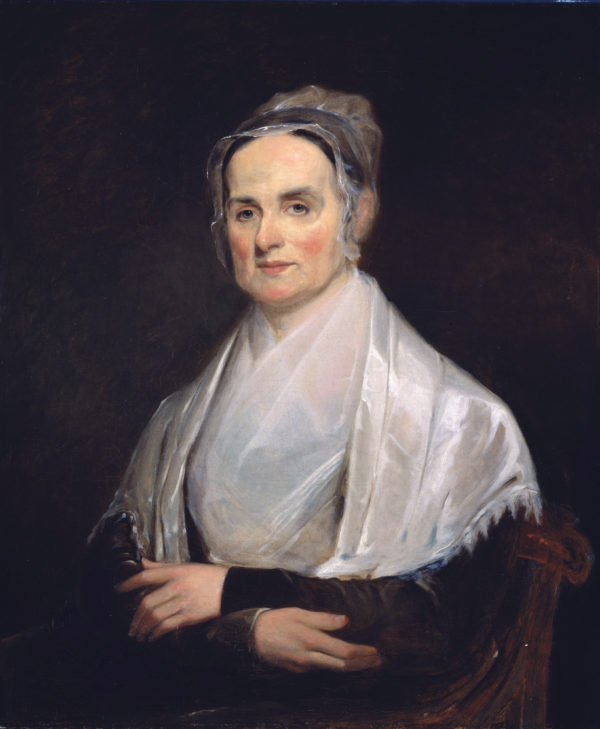
  • Lucretia Mott – Campaigner for Abolition, Advocate of Women’s Rights, Quaker Visionary

    Lucretia Mott was born in 1793 and much of her long life was devoted to working for the abolition of slavery and the emancipation of women.  Her life and work, is among those, which have shaped the world in which we live. The significance of her contribution was recognised in when in 1923, when Alice Paul first introduced the equal rights amendment to the US Congress calling it ‘the Lucretia Mott amendment’.  The amendment, which has still not been adopted into the U.S. Constitution, states in its first draft article: Equality of rights under the law shall not be denied or abridged by the United States or by any state…

    read more

    You May Also Like

    Agora movie – seeing ourselves through an alien past

    February 21, 2016
    patriotic cosmopolitanism - astronaut with international flag of planet earth designed by Oskar Pernefeldt

    Patriotic Cosmopolitanism

    August 22, 2015

    Gattaca dystopia: future, present or the past?

    October 10, 2013
  • Leo’s Letter, the Atomic Bomb and Sadako’s Cranes

    The following short story “Leo’s Letter” is written as a “fairytale” about the dropping of the atomic bomb. Although it is fictional, it is closely based on history. “Leo” is Leo Szilard, one of the founders of the Manhattan Project that created the first atomic bomb. Albert is, of course, Albert Einstein. Edward is Edward Teller, a scientist involved in the project. The President is first, President Franklin Roosevelt, and then, President Harry. S. Truman. Robert is Robert Oppenheimer. The doctor is Dr. Hiroshi Sawachika. Sadako is Sadako Sasaki, a girl who eventually succumbed to radiation poisoning after the dropping of the bomb over Hiroshima. Minimal ‘artistic’ licence has been…

    read more

    You May Also Like

    Alain Locke on Identity and Human Rights

    November 4, 2014

    Racism – a daily reality

    September 1, 2015

    The Universal Declaration of Human Rights: insights from its first draft

    October 21, 2014
  • Human footprint in sand

    What does it mean to be human?

    The Prem Rawat Foundation asks this question in its video release to mark the 2014 International Day of Peace. It’s just there in the flow of the narrative.  What does it mean to be human? Sometimes, the questions we ask, are the most significant thing.  Some questions create new realities.  They lead to discoveries we didn’t imagine before.  So, what does it mean to be human? If we look back into the history of human rights, we find similar transformative questions asked which opened a new future.  For example, what does it mean to be a woman? was a question repeatedly asked throughout the struggle to achieve gender equality.  In the…

    read more

    You May Also Like

    Senate Chamber

    Parliamentary Committee: Law to Strip Citizenship Lacks Proper Justification

    August 13, 2015

    Foreignness: a primary problem

    May 1, 2011

    Love Your Mother

    January 8, 2011
  • Martin Luther King Jr – Civil Rights Leader and Peace Advocate

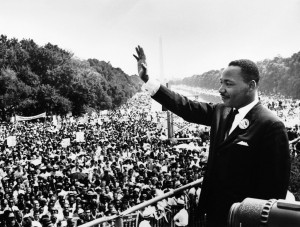
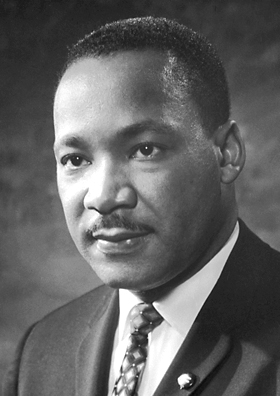
    Martin Luther King, Jr. gave his life for the poor of the world, the garbage workers of Memphis and the peasants of Vietnam. The day that Negro people and others in bondage are truly free, on the day want is abolished, on the day wars are no more, on that day I know my husband will rest in a long-deserved peace. —Coretta King This article is part of a series on human rights forebears.  Rev. Dr. Martin Luther King Jr. lived a life beyond the ordinary and writing about him is challenging.  His life made the world that came after him better.  This article will not do justice to his…

    read more

    You May Also Like

    Abolish Foreignness

    January 8, 2010

    Is ethnic nationalism a surrogate religion?

    October 9, 2011
    peace dove - church window - against violence

    We Are One – Bahá’u’lláh’s Teachings Against Violence

    April 29, 2017
  • The Peace Advocacy of Martin Luther King (Part 4 of 4)

    To appreciate Martin Luther King’s thoughts on peace, we must understand his thoughts about the relationship between human beings. He saw all human beings as caught “in an inescapable network of mutuality, tied in a single garment of destiny.” He expands on this thought in his 1964 speech, “The American Dream”. All I’m saying is simply this, that all life is interrelated. And we are caught in an inescapable network of mutuality, tied in a single garment of destiny — whatever affects one directly, affects all indirectly. For some strange reason I can never be what I ought to be until you are what you ought to be, and you…

    read more

    You May Also Like

    The Universal Declaration of Human Rights: insights from its first draft

    October 21, 2014
    Dubai

    The Middle West hiding in the Middle East

    August 25, 2016

    Tragedy knows no foreignness

    February 28, 2011
  • Martin Luther King and Non-violence (Part 3 of 4)

    Martin Luther King thought deeply about the best methods to use to overcome the injustices facing African Americans. This in itself is an important observation. It is appropriate for us in the 21st century to also think deeply about questions of method. His speeches frequently describe and defend nonviolence as the method he felt was both effective and moral for the issues on which he worked. Sometimes the description was in response to criticism of the method as “too extreme”, at other times it was to reject the violence advocated by some. His explanations were patient and detailed. The basic steps of the method are outlined to his fellow ministers…

    read more

    You May Also Like

    World in Union

    February 15, 2015

    Foreignness: a primary problem

    May 1, 2011

    The Duty of Kindness and Sympathy Towards Strangers and Foreigners

    October 18, 2011
  • Martin Luther King Jr. – What role did Christianity play in his civil rights advocacy? (Part 2 of 4)

    Martin Luther King Jr. was born in Atlanta Georgia, the second son of Martin Luther King Sr. and Alberta Williams King. Martin Luther King Jr. was by vocation a Baptist minister. He was in the fourth generation of his family to take up this vocation. It is impossible to fully appreciate Martin Luther King’s work without understanding the role that Christian thought and inspiration played in his advocacy of human rights. Martin Luther King’s letter from a Birmingham prison to fellow Christian clergymen gives insight to the role his religious commitment played in generating and sustaining his commitment to work for justice. Further, the people from whom he came, the…

    read more

    You May Also Like

    cc attribution share alike http://commons.wikimedia.org/wiki/File:Saint-Antonin-Noble-Val.jpg

    The Hundred Foot Journey

    August 26, 2014
    Graphs of migration planning levels for Australia http://www.immi.gov.au/media/statistics/statistical-info/visa-grants/ creative commons licence 3.0 attribution

    Crossing Over: does immigration policy discriminate?

    August 17, 2014
    Benghazi - calling for freedom

    Libya’s Migrant Slaves

    March 13, 2011
  • Martin Luther King Civil Rights Leader and Peace Advocate (Part 1 of 4)

    Martin Luther King, Jr. gave his life for the poor of the world, the garbage workers of Memphis and the peasants of Vietnam. The day that Negro people and others in bondage are truly free, on the day want is abolished, on the day wars are no more, on that day I know my husband will rest in a long-deserved peace.—Coretta King This article is part of a series on human rights forebears. Rev. Dr. Martin Luther King Jr lived a life beyond the ordinary and writing about him is challenging. His life made the world that came after him better. This article will not do justice to his contribution.…

    read more

    You May Also Like

    Lush – cosmetic or real

    June 5, 2011
    Silence

    Silence

    December 15, 2016

    World in Union

    February 15, 2015
  • Looking for peace

    Try finding peace

    The world seems to be searching for peace at the moment; but seems to be having a hard time finding it.  At least, this is what you may come to believe if you follow the news.  Maybe we’re looking in the wrong places. Have you every tried to search for “peace” news?  Scan either the Google or Bing news feed for “peace” and for page after page mostly what you find is “war”.  So by “peace” we seem to mean “war”.   No wonder we’re having a hard time finding peace. Of course these search engines are just mirrors of ourselves.  The engines prioritise news about war against peace searches, because…

    read more

    You May Also Like

    Alain Locke on Identity and Human Rights

    November 4, 2014

    Is ethnic nationalism a surrogate religion?

    October 9, 2011

    Lush – cosmetic or real

    June 5, 2011
 Older Posts
Newer Posts 
Copyright © 2026 Michael Curtotti. This is a publication of Aldila Press.
Ashe Theme by WP Royal.