-
A Fitting Memorial
On or around 14 November 2010 another 97 men, women and children lost their lives as asylum seekers crossing the sea to Australia. The recent Four Corners report (which focussed also on the people smuggler network involved) explored something of the lives of those lost. We here record their names, and what few details that Four Corners published concerning their lives. Such a listing can never be a fitting memorial. Among them was 24 year old Mohammad Rezaie whose fiance waited for him in Melbourne. He left home the day after his sister’s wedding. Ayad Al Kazami his wife and Hiba and Huba, their two daughters, were also on the boat. They also…
-
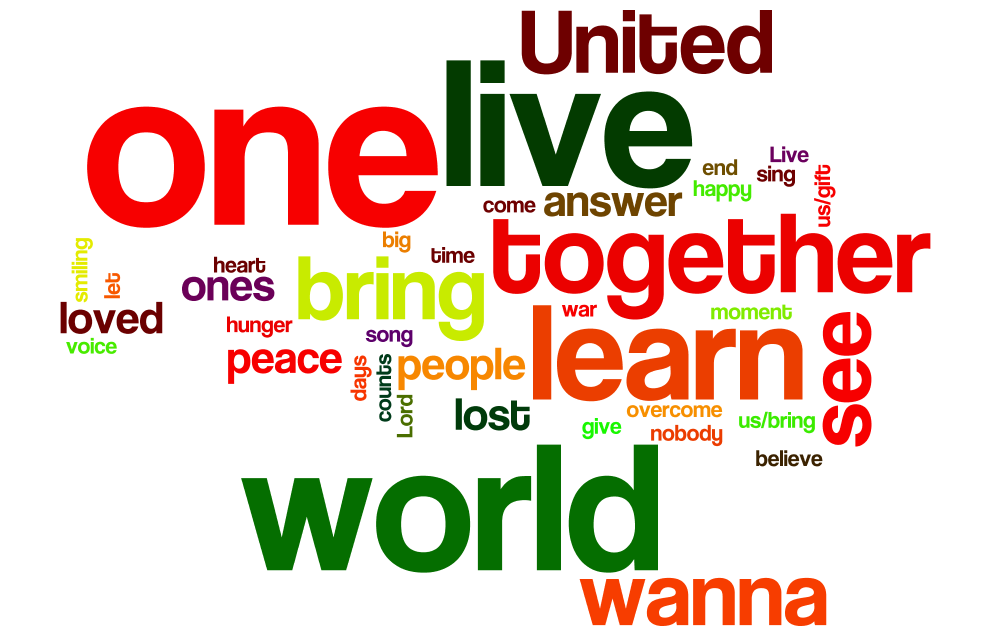
We have to bring the world together and learn to live as one
Sometimes our musicians capture in few words ideas at the heart of human rights. This article is dedicated to the song “United”, which was produced by a group of musicians “Playing for Change”. They wrote the song in cooperation with 7 billion actions, bringing together musicians from around the world. Where some might see the figure of 7 billion as a cause of alarm, these musicians see 7 billion human hearts. As 7 Billion Actions say on their webpage: 7 Billion Actions is connecting people and creating positive change through the universal language of music. Music has the power to break down boundaries between people. Music transcends geographical, political, economic, spiritual and ideological distances, uniting people…
-
Equal Pay for Equal Work
Everyone, without discrimination, has the right to equal pay for equal work. Universal Declaration of Human Rights, article 23(4) This idea is hard to argue with. It appeals to our sense of fairness. It appears in the Universal Declaration of Human Rights and in other human rights treaties, as well as in international labour conventions. Its history and elaboration is an achievement of the women’s movement. The principle is not however limited to gender inequality. Like other human rights principles, its realisation is a work in progress. Country after country has entrenched the principle of equal pay for equal work in national laws. Yet on a global scale, equal pay for equal…
-
How old is the idea of abolishing foreignness?
Today it is entirely natural to think that every person in the world is endowed with certain rights, ones that transcend foreignness and apply absolutely universally. We call these “human rights,” and we take them entirely for granted: We believe earnestly that everyone is indiscriminately entitled to them at birth, that we must safeguard them at almost all costs, and that anyone who violates them must be put to justice. Such a line of thinking is so dominant—perhaps even culturally hegemonic, though in a good way, if that is possible—that we may even tend to assume that this has always been true, that is, everyone has always had such rights,…
-
The Duty of Kindness and Sympathy Towards Strangers and Foreigners
It is hardest to write of those things about which we feel most deeply. Today I wish to write about someone whose words and life have profoundly influenced and inspired me. That person is Abdu’l Baha: the son of the founder of the Baha’i Faith and its leader from 1892 to 1921. I wish to address particularly what Abdu’l Baha had to say about the issue of ‘foreignness’. One hundred years ago, on 16 and 17 October 1911, he gave his first recorded talk to the people of Paris. The theme of his talk was “the duty of kindness and sympathy towards strangers and foreigners”. What did Abdu’l Baha see…
-
Is ethnic nationalism a surrogate religion?
The notion of foreignness relies on a separation of ‘us’ and ‘them,’ and today’s world, it is often ethnicity and nation—two terms that are related but not necessarily coterminous—that create that us-them dichotomy. It is crucial to realize, however, that the ideas of ethnicity and nation are hardly timeless. We tend to cherish our so-called ethnic or national identities as if they are embedded in our DNA, and while there is of course nothing necessarily wrong about doing so, it is also essential to bear in mind that far from being natural, ethnic or national identities are socially constructed—and, what’s more, only socially constructed very recently. In order to understand…
-
The borders of virtue and power
Closing borders: to refugees, to undocumented migrants, raises questions of virtue and questions of power. The public debate around borders is so fractured, so superficial, so bedevilled with assumption and ritual conflict that it conveys little new meaning. It simply reiterates the existence of a continuing contest – a contest that often is more about power than rights. In this contest we see progressively increasing brutality and violence. Resort to force, implicit or explicit, is the modern day tool of choice underpinning this public debate. Whether in the sophisticated armory and defenses of international borders or the increasing instances of riot of those who assert their freedom. The tiny island of Lampedusa saw such an example this…
-
Viewing Libya through a different lens
An inevitably recurring theme in discussions of foreignness is the disjunction between our increasingly globalized world and global systems that limit and misrepresent that globalization. We have found this tension in economics this month: the European Union’s ongoing economic struggles and this month’s financial roller coaster, triggered by the U.S. debt crisis, are both symptoms of global society haltingly coming to terms with an interconnectedness unprecedented in history. And, perhaps equally poignantly, we have found it in politics: global reactions to turmoil in Libya signal uneasiness and uncertainty in our collective understanding of the extent to which global society should intervene in the affairs of a sovereign state. When revolution…
-
Would you have me argue that all human beings are equal?
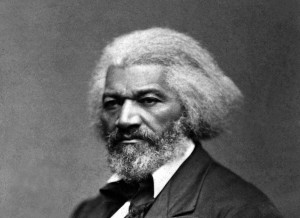
Frederick Douglass was a remarkable worker for human rights. Although he lived more than a century ago, his thoughts remain pressingly relevant. He began life as a slave, but winning his own freedom, he fought not only for abolition of slavery but also gave his support to other human rights causes, such as the emancipation of women. Born in 1818 in Talbot County, Maryland, he was separated from his mother at an early age, he writes, as was typically done with slave children. His father, he believed, was his mother’s master. Even though it was against the law for slave children to be taught to read and write, Sophia Auld the…