poetry
-
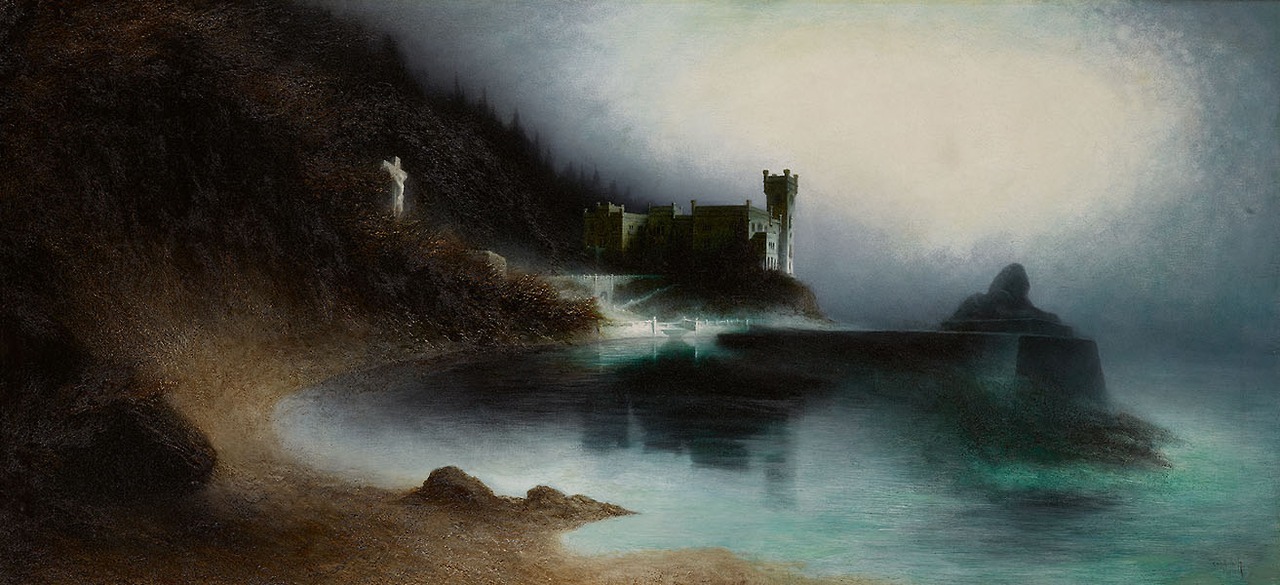
Giosuè Carducci and Miramar Castle
Mexico gifted Italy the tomato. Italy sent back an Emperor. It wasn’t a fair exchange. And it wasn’t welcomed. The story begins in Miramar Castle and Giosuè Carducci is our story teller and his poem Miramar can be read below. Carducci came to the castle when it was already a place where ghosts whisper of the past. However the journey that took him to the castle passes through one of the most turbulent eras of Italy’s history. Carducci was born in 1835 and lived to see the birth of the new country of Italy. However he was not just a passive spectator. He was a passionate advocate of the Risorgimento.…
-
Isabella’s Castle Prison and Her Poetic Escape
Isabella di Morra looked out from a height. Below, in a deep chasm, flowed a river. Her river, the Sinni. Isabella turned her eyes to the sea, searching the horizon for a ship. It was the ship that would carry her free from her prison, her own family’s castle. D'un alto monte, onde si scorge il mare,miro sovente io, tua figlia Isabella,s'alcun legno spalmato in quello appare,che di te, padre, e mi doni novella, ...From a high mountain, where sea is seen,Often I gaze, Isabella, your daughter,For the gleam of any glistening beam,Which of you, father, brings news across water ...Ch’io non veggo nel mar remo né vela (così deserto…
-
Laura Terracina: For Who is Enemy to Woman
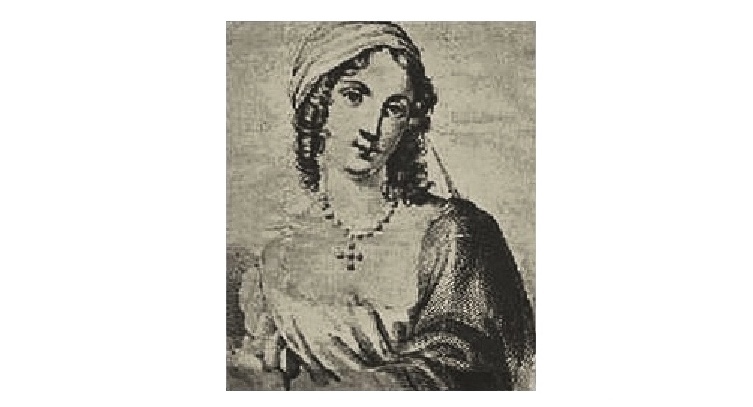
“How dare you raise hand, against so young and beautiful a vision?” With such words does Laura Terracina (1519 – 1577) defend her sex. Born in Naples, she was the most published poet of Italy’s sixteenth century and a feminist before the word “femminista” existed. She was part of a movement of italian Renaissance women writers whose existence is often overlooked in the historical record. So much were women absent from tellings of the Renaissance and so mixed their lived experience, that it caused Joan Kelly to famously ask “Did women have a Renaissance?” While the answer is complex, the Renaissance saw for the first time in Europe, substantial publication…
-
Who Am I to Speak to You of Italy?
Who am I to speak to you of Italy? Chi sono io, per parlarvi dell’Italia? Who, for more than 50 years have lived in silence, far beyond her shores. Chi sono io, per parlarvi dell’Italia? Chi, per più di cinquant’anni ha vissuto in silenzio, lontano dalle sue sponde. Yet, such words do not belong to me alone. “Italian Americans are invisible people.” Fred Gardaphé writes, “Not because people refuse to see them, but because, for the most part, they refuse to be seen.” Even here, across an ocean, truth resonates in his words. And as he knows, being forgotten has a price. A price paid with the coins of self-forgetting.…
-
Dante’s New Love Life: the Vita Nuova
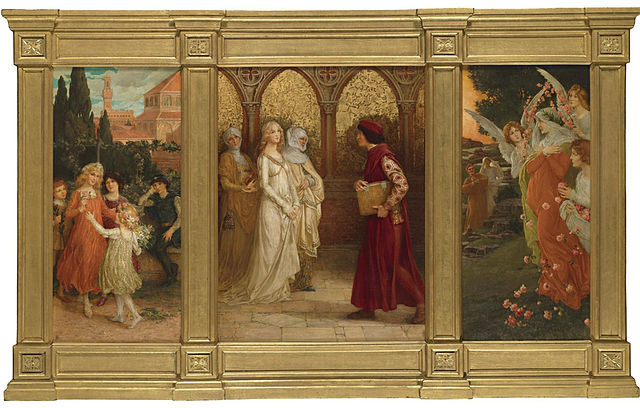
The love poets of Dante’s day told everyone they were in love: but always kept the name of their beloved secret. Dante however, names Beatrice as his love. In telling us of her, he has made her immortal. Gemma di Manetto Donati, Dante’s actual wife, he never once mentions and she is virtually unknown. Before we jump to conclusions about what this might mean let us learn more about Dante’s love life. Vita Nuova Dante’s Vita Nuova (“New Life”), which is Dante’s best known work as an early poet, is all about “love”. Dante recounts for us a love story and he is the lover and Beatrice the beloved. Some…
-
Maria Famà – “I will not check the box for white on any form”
Maria Famà’s poem “I Am Not White” lives in the folded places between two worlds. Through her Italian-American eyes we see her lived experience of America’s hyper-racialised culture. The central dynamic of the poem is a box on a form. A box which, in truth, demands a lie. For her stories do not belong. The convenience which in America goes with the claim is too uncomfortable. The price is too high for Maria Famà. “I will not check the box for white on any form.” Her reflections go further for her words reminds us that the Mediterranean, where Sicily (and Italy) is found, is not only a European sea. Its…
-
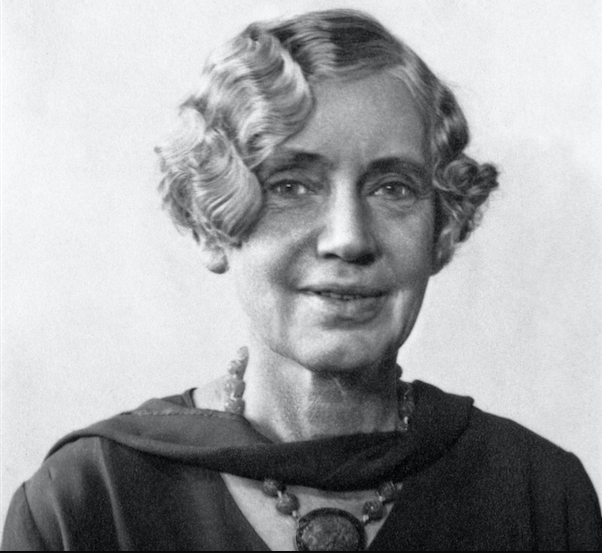
Martha Root — An Astonishing Life
Today I am at a Baha’i meeting, and I want to say thank you for the blessing of having such times in my life. To each and every soul who helps to make so many of those gatherings a veritable corner of paradise — thank you. This morning we are reflecting on the life of Martha Root, a woman whose life was inspired and transformed by Bahá’u’lláh. We will be reading about her life as introduced on the website bahaiteachings.org. I hope you can join us in spirit and read along. In one of his earlier works, the Hidden Words, Bahá’u’lláh observes that “words are the property of all alike” and that “guidance hath ever been given…
-
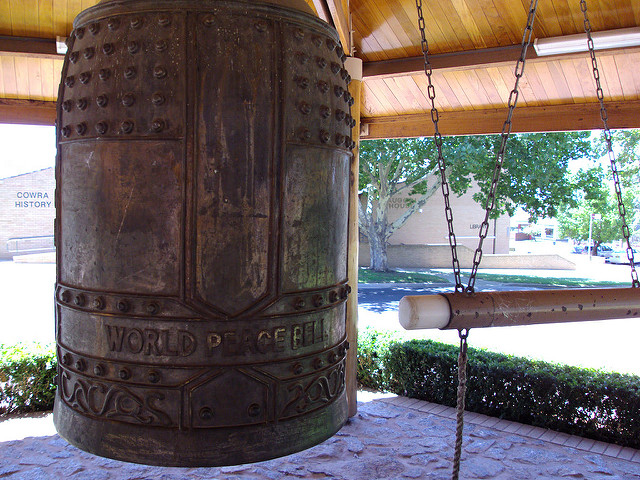
Cowra Peace Bell tolls a warning
As many know, Cowra once held a Japanese prisoner of war camp. The tragedies that happened there when the prisoners tried to break out, has become the stuff of Australian legend. Less well known is that Japanese civilians were also interned in Cowra during the war. Some never left Cowra. A World Peace bell, donated by the World Peace Bell Association, was erected in Cowra in 1992, in recognition of the city’s contribution to peace and its enduring connections with Japan. I wrote this poem after a visit to Cowra. The Cowra Peace Bell, like those erected in other cities around the world, follows a traditional Japanese design. In Japan…
-
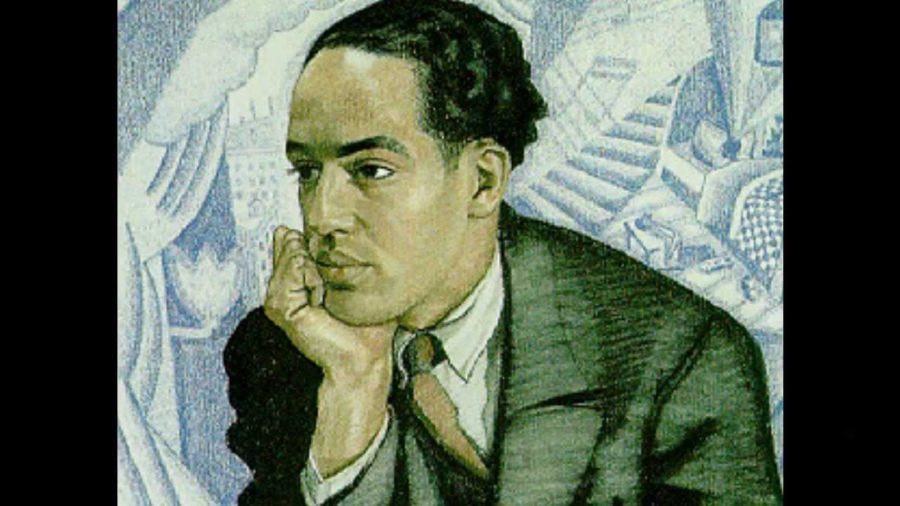
The Poetry of Langston Hughes
Racism and problems of race relations continue to generate injustice and racial animosity around the world. The problem is not confined to any one people or country, but the case of the United States is better known in the English speaking world. The poetry of Langston Hughes comes from a period in which racism had reached a peak – what is known as the “Jim Crow” era. The United States civil war ended slavery, but it didn’t end racism. Gradually racism took a stronger hold in society and by the early 20th century it gave rise to toxic theories of racial supremacy and scientific racism. A fierce segregation was instituted between…